
H3 · lora
subject_definitions: = the rider's cockpit at the rider's own point of view in...
Render by nottheninja on Civitai
Model: Extreme Enduro - Better Bike POVs and Motion
Prompt
subject_definitions:

<Subject 1> = the rider's cockpit at the rider's own point of view in <Picture 1>: two hands in black leather gloves carrying bright green knuckle, palm-edge and cuff accents, gripping black clip-on bars; black grips and black switchgear clusters with green-outlined buttons on the left and a red kill switch on the right; a black upper yoke carrying a large chrome steering-stem nut, two black fork-top adjusters with pale engraved markings, a small translucent fluid reservoir with a black cap on the right, and ZX10R lettering across the yoke face; a black-tinted windshield arcing above; two folding mirrors on black stalks at the left and right frame edges with green fairing winglets beneath them; a rectangular digital instrument display centred above the yoke showing a bar-graph tachometer with a large numeric readout and green, white and red elements. Grip spacing, control layout, mirror and winglet placement, yoke hardware and the machine's green plastic tone all derive from <Picture 1>. The numeric readout is visible but is not treated as a locked data value.

<Subject 2> = the green-and-black sport motorcycle beneath the viewpoint in <Picture 1>: the machine whose motion drives every frame — bright green upper fairing shoulders and winglets flanking the black dash surround, a black-tinted screen, black bar and yoke hardware, visible in the opening framing and again in the low-mounted framing at the bottom of frame. It is the same machine each time it enters frame; only how much of it is visible changes.

<Subject 3> = the mountain road and storm world in <Picture 1>: cracked, patched and sun-bleached asphalt with coarse aggregate, a dark centre seam and a long running crack, a worn white edge line low left, running away from the camera and bending gently right in the middle distance before it passes out of frame; weathered rust-brown W-beam guardrails on both sides on short posts; scrub, coarse grass and low green brush on both shoulders rising into wooded green slopes and layered misted ridges toward the horizon; a heavy dark grey-green storm ceiling above it all; and two colossal tendrilled masses hanging in the sky — a smaller mass at frame left and a much larger one occupying the centre and right, built of thick grey-green rope-like strands with faint pale cyan luminescent pockets deep inside them. Geography, horizon bearing and light direction are preserved from <Picture 1>.

summary:

[reference generation] 5.00 seconds, three camera setups, two authored hard cuts at 00:01.700 and 00:03.300. A POV rider runs a cracked mountain road at speed between rusted guardrails under a storm ceiling, the colossal tendrilled mass hanging over the bend — flat out over the centre seam, hammering through the yoke mount, then banking right toward the misted ridge.

retention_analysis:

<Picture 1> ([Shot 1] composition anchor / first frame): partially_preserved — retained: <Subject 1>'s cockpit geometry (grip spacing, clip-on and yoke hardware, chrome stem nut, fork-top adjusters, fluid reservoir, mirror stalks, green winglets, display surround), used in Shots 1, 2 and 3; <Subject 2>'s machine geometry (green fairing shoulders and winglets, black screen, black bar and yoke), used in Shots 1 and 2; <Subject 3>'s world (cracked asphalt with centre seam and running crack, worn edge line, rust guardrail line and post spacing on both sides, shoulder scrub, wooded slopes and misted ridge bearing, storm ceiling, both tendril mass bearings and their altitude relative to the bend, faint cyan luminescence at the right mass, diffuse overcast key from above and slightly camera-left), used in all three shots as fixed geography and light. Released per directed setup: framing, mount height, viewing distance, field of view, depth of field and bokeh change at each hard cut, and pose, lean, pitch, yaw and shake are animated rather than frozen. Facial likeness is not retained or needed — the rider's face and helmet never enter this point-of-view frame. Unsupported element flag: the storm ceiling and the two tendrilled masses are evidenced by the attachment but are not approved canon; if they are not confirmed by the creator they are atmosphere only, and the road, the machine and the light carry the scene.

detailed_description:

Visual treatment: flat storm daylight from one broad source above and slightly camera-left, holding the tarmac in mid greys and the slopes in muted green while the cloud ceiling stays dark without clipping; wet-free dry asphalt with a dull even sheen, rust bloom on the guardrail faces, and no specular highlight anywhere on the road. The only saturated accents in frame are the machine's green plastic and glove trim, and the faint pale cyan luminescence deep inside the tendril mass at frame right, which throws no bounce onto the machine. No fill light, no vignette, no added lens flare, no arbitrary colour cast. Optics: wide action-camera perspective at the helmet mount with mild edge falloff, narrowing to a tighter arc at the yoke mount; deep focus from roughly 0.4 m to the bend at the helmet mount so the road, the guardrail line and the tendril mass stay legible, shallower at the yoke mount where the near mirror stalk and switchgear soften; fine natural sensor grain, no synthetic sharpening. Motion blur is real and forward-vectored — asphalt grain, edge line and guardrail posts streaking radially away from frame centre. Delivery 9:16, crop centred on the yoke and the road axis, the tendril mass and storm ceiling holding the upper third.

INHERITED MOTION PALETTE — this camera is bolted to the rider and inherits the head, and applies to every setup below: (a) 7–12 Hz chatter of plus or minus 1.5–3 degrees of yaw and roll from engine and asphalt aggregate; (b) single-frame 8–12 degree pitch spikes on the centre seam, patch edges and the running crack; (c) a sustained 18–24 degree bank held through the right-hand bend, then released; (d) pitch excursions from minus 12 to plus 8 degrees over the patched crown; (e) sudden 3–6 degree countersteer snaps with the bar, levers and mirrors visibly swinging in and out of frame; (f) 6–10 degree brake dive with the yoke and mirrors dropping together when the rider corrects line; (g) a rear step of about a hand's width across the polished aggregate and edge-line paint, with a short re-grip. Head counter-rotation applies: on the bank the horizon rotates less than the bike angle. None of these stops for a cut.

[Shot 1] — 00:00.000–00:01.700. Helmet mount, high over the bars; the opening framing matches <Picture 1> exactly at 00:00.000. Both gloved hands and the full bar width across the lower third, the digital display and yoke hardware centred, the mirrors and green winglets at the left and right frame edges, the black screen arcing above them, the cracked road converging just left of centre and bending right in the middle distance, the worn edge line low left, the rust guardrails running to the bend on both sides, shoulder scrub and wooded slopes beyond them, the storm ceiling and the two tendrilled masses filling the upper half with the larger mass centre-right. Screen direction: forward along the camera z-axis. Motion: (a) chatter running continuously at speed, asphalt grain and the centre seam streaking under the bars; at 00:01.100 the front crosses the long running crack — a (b) 9 degree pitch spike snaps the horizon down and back and jolts the treeline and both mirrors together — then the frame recovers; the machine's green shoulders hold steady against the rotating ground; the note climbs across the last half second.

HARD CUT — 00:01.700.

[Shot 2] — 00:01.700–00:03.300. Yoke mount, low over the top clamp. Gloved hands now at the extreme left and right frame edges, the black yoke and chrome stem nut filling the lower centre with the fork-top adjusters and the small fluid reservoir, the green fairing shoulders entering at both lower corners, the cracked tarmac filling the whole frame as a hard running field with the edge line raking left and the guardrail above it. Screen direction: forward along the camera z-axis. Motion: this is the bouncing peak — each patch seam produces a (b) 12–15 degree vertical jolt with the asphalt strobing under the wheel and the horizon legible only in fragments between jolts; at 00:02.300 the rider makes an (e) 5 degree countersteer snap left to skirt a broken patch edge, the left switchgear and mirror swinging into frame, the rear stepping a hand's width on the polished aggregate and paint before it re-grips. Tyre roar and drivetrain are loudest here.

HARD CUT — 00:03.300.

[Shot 3] — 00:03.300–00:05.000. Helmet mount, tipped into the right-hand bend. The road curves right toward the misted ridge with the guardrail turning with it, the larger tendril mass dominating the upper right and the smaller mass holding upper left; the rider banks the machine into a (c) sustained 22 degree right roll and holds it through the apex while the rider's head counter-rotates against that roll, so the horizon lags roughly half the bike angle and the storm ceiling rotates counter-clockwise across frame. Screen direction: forward along the camera z-axis, curvature to the right. Motion: (a) chatter rides on top of the held bank; at 00:04.400 the front settles under a (f) 9 degree brake dive as the rider corrects line, the yoke and mirrors dropping together and the green shoulders dipping a hand's width in frame; at 00:04.800 the bank releases and the horizon levels as the road straightens toward the mist. Final image: the road running away toward the ridge between the guardrails, the tendril mass still hanging over the centre of frame, the frame still chattering — nothing settles, the run continues past the last frame.

Continuity locks: Keep unchanged: cockpit geometry, grip spacing, clip-on and yoke hardware, mirror and winglet placement, glove and garment state, machine build and green plastic tone, cracked road bearing and curvature, centre seam and running-crack positions, edge-line position, guardrail line and post spacing, shoulder scrub and ridge bearing, both tendril mass bearings and altitude, storm ceiling, light direction (broad overcast key from above and slightly camera-left), forward screen direction, gravity physics. Facial likeness is not reproducible — the rider's face and helmet never enter this point-of-view frame. The numeric dash readout is not a locked data value.

Exclude: morphing, warping, dissolves, identity drift, geometry warping, invented enduro terrain, cinder, lava or jungle foliage, invented course markers or plastic stakes, extra tendrils beyond the two established masses, any tendril reaching the road or the machine, any creature intent or attack invented, a discovered rider's helmet or face appearing in frame, added lens flares, arbitrary colour casts, unmotivated cuts (the two cut points above are directed and motivated), text overlays, watermark.

No added captions, subtitles, overlays or watermarks.

overall_soundscape:

Open mountain air with a long soft return off the valley — the mic is mounted with the camera and takes every jolt. Engine note under load throughout, rising across Shot 1 and holding near peak through Shots 2 and 3; broad continuous tyre roar over coarse asphalt with grit rolling under the guards; small stones ticking off the fairing lower and the fork; a faint drivetrain whine; brake and lever clack at the correction beats (00:02.300, 00:04.400); steady wind buffeting across the capsule that swells through the bend; behind everything a low continuous storm wind layer with two distant thunder rolls, one under Shot 1 and one under Shot 3. No sound is attributed to the tendrilled masses. No dialogue, no voices, no crowd.

non_diegetic_music:

N/A — no score is requested or established for this scene; engine, asphalt and the storm air carry the rhythmic load.
Related prompts
 A chaotic cityscape bathed in the neon glow of streetlights is torn apart by a...
Flux
A chaotic cityscape bathed in the neon glow of streetlights is torn apart by a...
Flux
 The Matrix, but All Characters are Cats – In the stark, green-tinged office...
Flux
The Matrix, but All Characters are Cats – In the stark, green-tinged office...
Flux
 hyperrealistic art D1gitalL1nes, Night in the garden of the samurai castle....
Flux
hyperrealistic art D1gitalL1nes, Night in the garden of the samurai castle....
Flux
 zidiusArt, anime-style tiny fox, made of sparkling white and black fire...
Krea2
zidiusArt, anime-style tiny fox, made of sparkling white and black fire...
Krea2
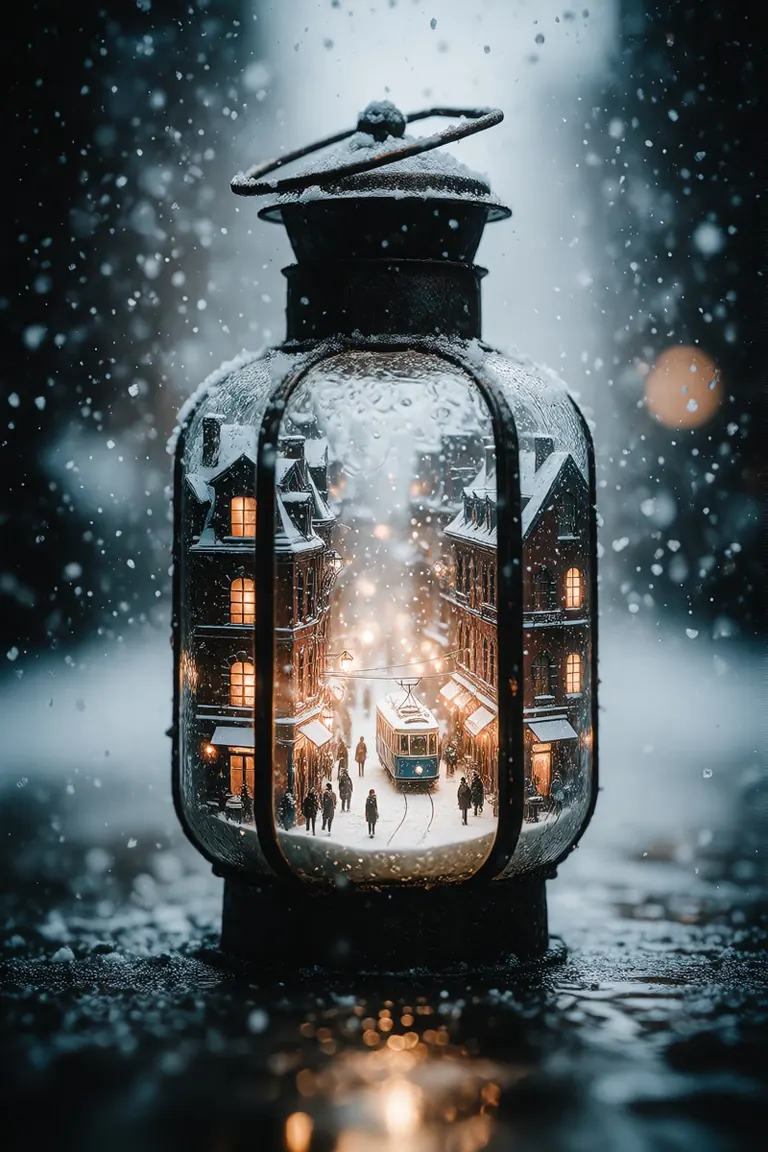 zidiusArt, A hyper-detailed magical realism illustration of an old, weathered...
Krea2
zidiusArt, A hyper-detailed magical realism illustration of an old, weathered...
Krea2
 zidiusArt, a Christmas present, it's lid popping off in a dramatic fashion...
Krea2
zidiusArt, a Christmas present, it's lid popping off in a dramatic fashion...
Krea2